Shrubs, herbs and ferns
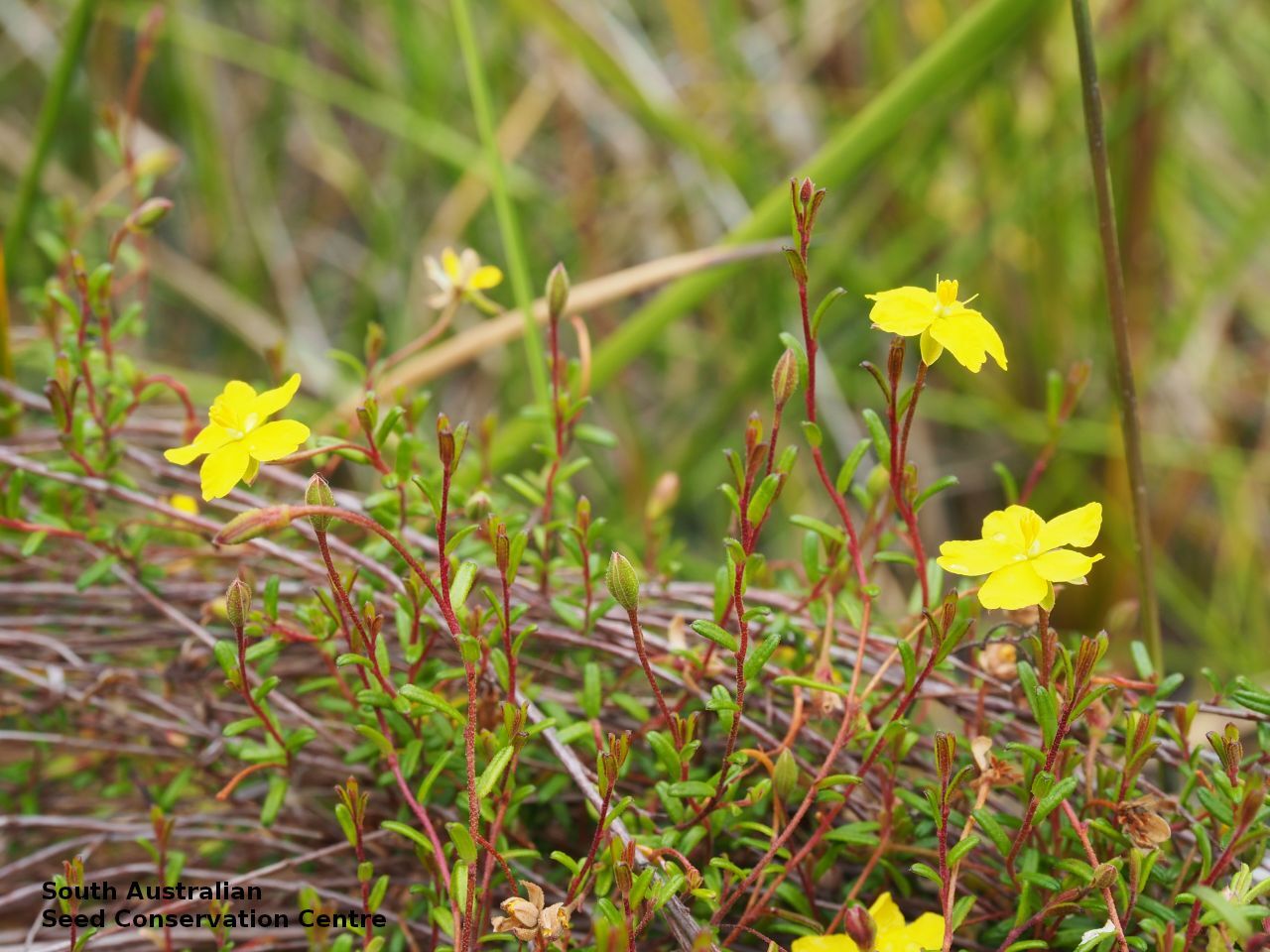
Yundi Guinea Flower
Hibbertia tenuis
Photo D. Duval
Endemic to Hills and Fleurieu region. Very small populations and highly restricted with some successful translocations to Yundi area and Stipiturus CP in recent years.
Mount Compass Oak-bush
Allocasuarina robusta
Endemic to Hills and Fleurieu region. Majority of populations on roadsides, including translocations are continuing to decline and require ongoing management. Establishment of large insurance populations (in addition to Stipiturus CP) within good condition protected sites is required.
Osborn's Eyebright
Euphrasia collina ssp. osborni
Swamp form populations highly restricted and low population size and high priority. Dryland form is better represented and a lower priority
Deep Creek Correa
Correa eburnea
Endemic to Hills and Fleurieu region. Very restricted distribution but reasonably well conserved in Deep Creek NP. Some translocations undertaken with NPWS SA in recent years.
Hindmarsh Correa
Correa calycina var. calycina
Endemic to Hills and Fleurieu region. Past translocations undertaken at Hindmarsh Falls and Hindmarsh Tiers with a new population record (6 plants) recently recorded at Spring Mt CP
Butterfly Spyridium
Spyridium coactilifolium
Endemic to the Hills and Fleurieu region. Highly restricted distribution. Well conserved in Newland Head CP (and Parsons). Several surveys and translocations undertaken as part of previous investment.
Skeleton Fork-fern
Psilotum nudum
A single population for SA formerly known from a lower cliff face in Mt Bold reservoir. Re-introduction back into Hills and Fleurieu region was undertaken with plants from original population. SA SCC have additional plants in the nursery from this locality ready for translocation
Bog Clubmoss
Lycopodiella serpentina
ESA records restricted to Hills and Fleurieu region. Better conserved in other states of Australia and New Zealand. Very difficult to locate now, recently observed in swamp at Yundi
Bushy Clubmoss
Lycopodium deuterodensum
One known population in SA in Cleland CP in Hills and Fleurieu region.
Australian Carraway
Oreomyrrhis eriopoda
Only known from two sub-populations in the Hills and Fleurieu region (Heritage Agreement property in Cudlee Creek area and Mount Bold area) and otherwise in SA only known from Dry Creek area near Lower Glenelg River in southeast region.
Showy Violet
Viola betonicifolia ssp. betonicifolia
Only known from a single population in Mt Bold reservoir.
Small Rasp-fern
Blechnum rupestre
A single extant population in Hills and Fleurieu region in Cleland CP. Ashton record possibly incorrect
Forked Comb-fern
Schizaea bifida
Now extremely rare and difficult to locate in Hills and Fleurieu region.
Leafy Templetonia
Templetonia stenophylla
A single population at Hartley for Hills and Fleurieu region. Quite disjunct from buloke woodland habitat near Wolseley on Victorian border.
White-flower Matted Pratia
Lobelia pedunculata
A single population in the Hills and Fleurieu region in Scott Creek CP, where the spring fed area in which it occurs has dried over the years. Another population near Dry Creek on the Lower Glenelg River in SA. SA SCC indicate it should be listed as Endangered in SA. Formerly called Lobelia puberula in SA.
Swamp Mazus
Mazus pumilio
A single population in the Hills and Fleurieu region in Scott Creek CP, but the spring fed site has gradually dried and species might now be extinct in the region. No seeds ex-situ banked. Requires additional survey effort
Jagged Bitter-cress
Rorippa laciniata
Extremely rare in SA. Endemic to Hills and Fleurieu region. Very restricted distribution in higher rainfall areas. A few small populations in Kuitpo area in Hills and Fleurieu region.
Mount Lofty Phebalium
Leionema hillebrandii
Some dieback observed during past drought conditions. Requires survey and population assessment to determine current conservation status via CAM and possible EPBC Act nomination. SA SCC indicate it is likely Critically Endangered.
Rock Correa
Correa glabra var. leucoclada
Endemic to Hills and Fleurieu region. Very restricted distribution. High priority for survey and population assessment to determine current conservation status via CAM.
Leafy Button Everlasting
Coronidium densifolium
Endemic to Hills and Fleurieu region. Presumed extinct. Only known from three historic specimen records in the region, with last record from Black Swamp in 1968. A candidate for reintroduction in Currency Creek area if suitable source can be located.
Hairy Guinea-flower
Hibbertia hirsuta
Populations in Hills and Fleurieu region are part of a disjunct mainland distribution in the Mount Lofty Ranges, separated from Tasmanian populations.
Finniss Spyridium
Spyridium latifolium
Endemic to Hills and Fleurieu region and very restricted in distribution. Surveys required to better map and assess population size and status for a conservation assessment. Likely to come up for CAMs review and possible EPBC Act nomination