H5 Bird Flu: If you notice multiple sick or dead birds or other animals record your location and report it to the 24-hour Emergency Animal Disease Hotline on 1800 675 888.

Latest News -
Next five years critical to the future of the Hills and Fleurieu
The Adelaide Hills and Fleurieu Peninsula are at a turning point. Growing pressure from climate change, water security challenges, declining native wildlife and the spread of invasive weeds and pest animals means the decisions made over the next five years will shape the future of the region for decades to come.
To help guide that response, the Hills and Fleurieu Landscape Board has today released the Regional Landscape Plan 2026 –2031. The plan sets a clear direction for protecting and restoring the region's landscapes while supporting productive farms, resilient communities and a healthy environment.
It provides a roadmap for coordinated action across the landscape, bringing together communities, land managers, First Nations, industry, councils and government to tackle some of the region's most significant environmental and agricultural challenges.
Chair David Greenhough said the plan reflects a clear message heard during community consultation: protecting the region's land, water and nature will require stronger collaboration and shared responsibility.
"Across the Hills and Fleurieu, people are already taking action to care for the places they value. This plan builds on that momentum and provides a shared direction for the next five years," Mr Greenhough said.
"The challenges we face are bigger than any one organisation. Success will rely on land managers, volunteers, First Nations, community groups, industry and government continuing to work together to achieve lasting change."
Home to more than 170,000 people and over 14,000 land managers, the Hills and Fleurieu supports internationally recognised food and wine industries, supplies a significant proportion of Adelaide's drinking water and contains some of South Australia's most important biodiversity hotspots. At the same time, the region faces increasing pressure from climate change, declining ecosystem health, invasive weeds and pest animals and growing demand on natural resources.
The plan is built around five connected priorities: Community, Climate, Land, Water and Nature. Together, they provide a framework for protecting and restoring native ecosystems, improving water security, supporting sustainable primary production, building climate resilience and strengthening community stewardship.
Key regional priorities include supporting the recovery of threatened species and ecological communities, completing and implementing updated Water Allocation Plans for the Mount Lofty Ranges, improving waterway health, reducing the impacts of pest plants and animals and helping communities and industries adapt to a changing climate.
The plan also supports ambitious long-term targets, including eradicating feral deer and goats from the region by 2032, reducing the extinction risk of priority threatened species and ecological communities and progressing towards a net-zero, climate-resilient future.
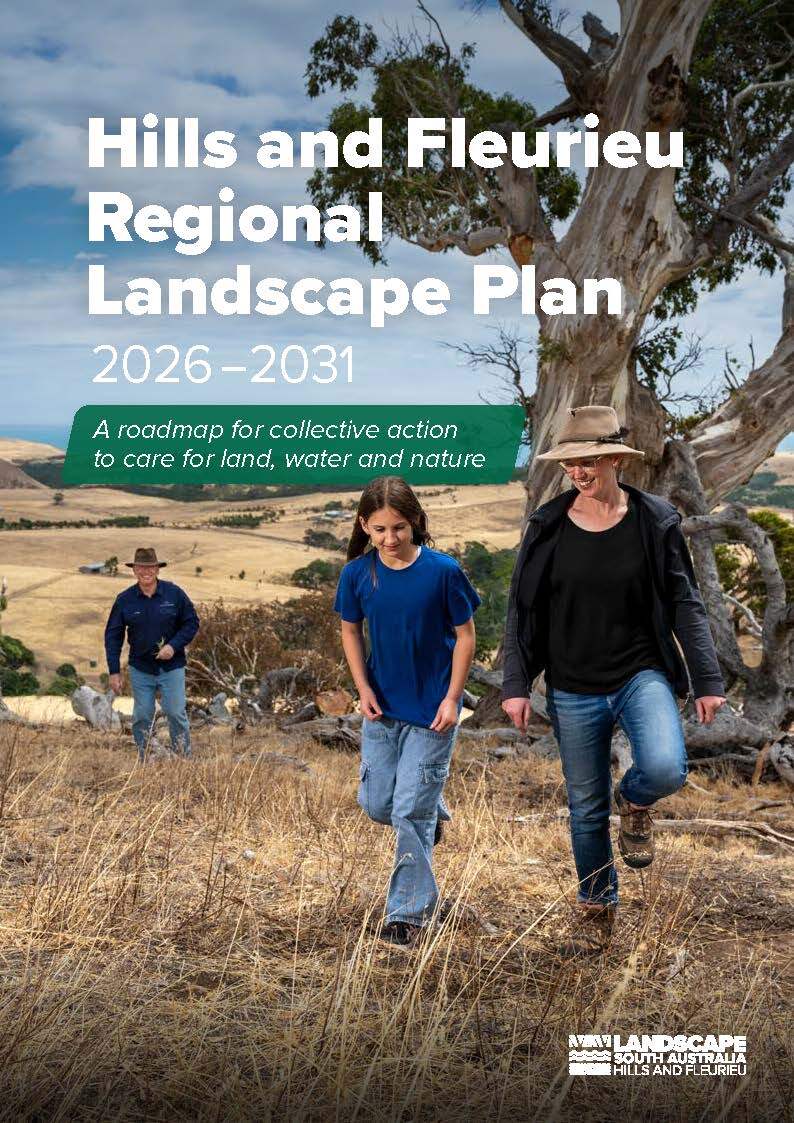
Mr Greenhough said the health of the region would ultimately be determined by the thousands of decisions made every day across the landscape.
"Every property, every farm, every roadside, every reserve and every waterway forms part of a much bigger picture," he said.
"When landholders control weeds, protect native vegetation, improve soil health or fence a creek, when volunteers restore habitat and when councils, industry and government invest in better land and water management, those actions add up across the landscape. That's how we build a healthier, more resilient Hills and Fleurieu for future generations."
The Hills and Fleurieu Regional Landscape Plan 2026–2031 is available here.
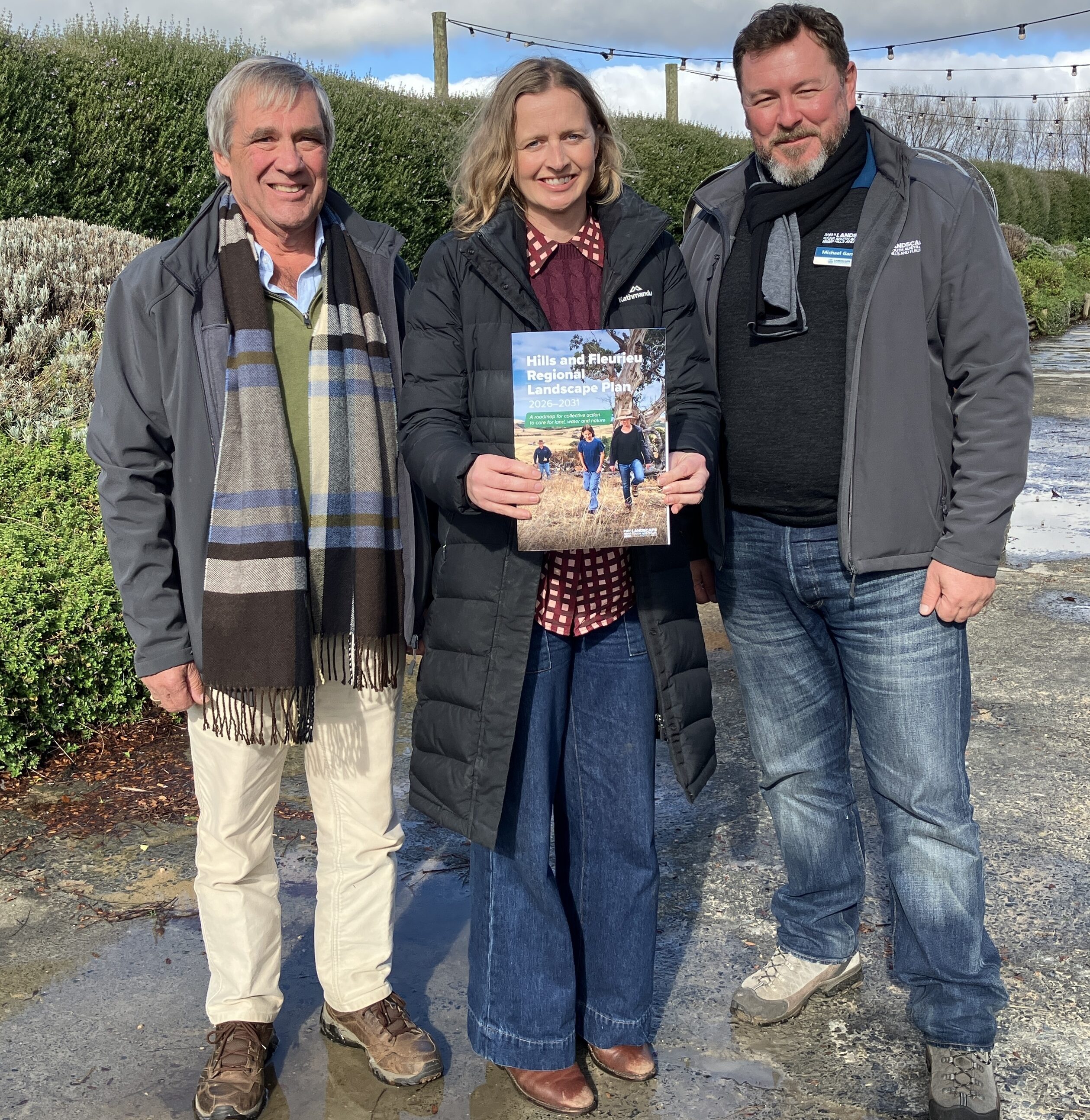
Minister for Climate, Environment and Water Emily Bourke with Hills and Fleurieu Landscape Board Chair David Greenhough and General Manager Michael Garrod following the release of the Regional Landscape Plan 2026-2031.