H5 Bird Flu: If you notice multiple sick or dead birds or other animals record your location and report it to the 24-hour Emergency Animal Disease Hotline on 1800 675 888.

Latest News -
Ngarrindjeri culture and language still deadly
Each year, National NAIDOC Week invites all Australians to recognise and celebrate the history, culture and achievements of Aboriginal and Torres Strait Islander peoples - the oldest continuing cultures on earth. In 2026, the theme “50 Years of Deadly” marks a powerful milestone, honouring the strength, leadership and resilience of generations who have carried culture forward and continue to shape the future.
At Clayton Bay, this theme was brought to life through a Ngarrindjeri language and cultural workshop led by Ngarrindjeri women Aunty Vicki Hartman and Aunty Georgie Trevorrow, alongside community leader Candice Love. Bringing Ngarrindjeri people together across generations, the workshop created a space for connection through language, shared knowledge and deep listening to Country.
Participants spoke about Healthy Country not only as clean, clear water and thriving plants and animals, but as a place where people are present - fishing, gathering, weaving, learning and sharing stories.
The Southern Bell Frog, now locally extinct in the Lower Murray, became a focal point for conversations, representing environmental challenges including declining water quality, habitat loss and shifting ecosystems experienced over generations. Through memory and lived experience, participants reflected on what has been lost, and what can be restored.
The workshop centred Ngarrindjeri ways of knowing - learning through looking, listening, feeling and yarning. Knowledge was shared across ages, grounded in observation and connection to place. Participants identified indicator species such as frogs, turtles and yabbies, and spoke to the role of wetlands and water systems in sustaining life.
Ngarrindjeri Aboriginal Corporation CEO Walter Jackson said the workshop reinforced a simple but powerful truth.
“Culture, language and Country are inseparable. Caring for waterways, wetlands and species is not just environmental work, it’s cultural responsibility. Bringing people together across generations is how knowledge, stories and language are shared.
“A healthy future for Country relies on cultural knowledge and authority. The involvement of Ngarrindjeri people is essential in shaping restoration, ensuring it is grounded in culture, respects traditional knowledge and builds connections for future generations,” he said.
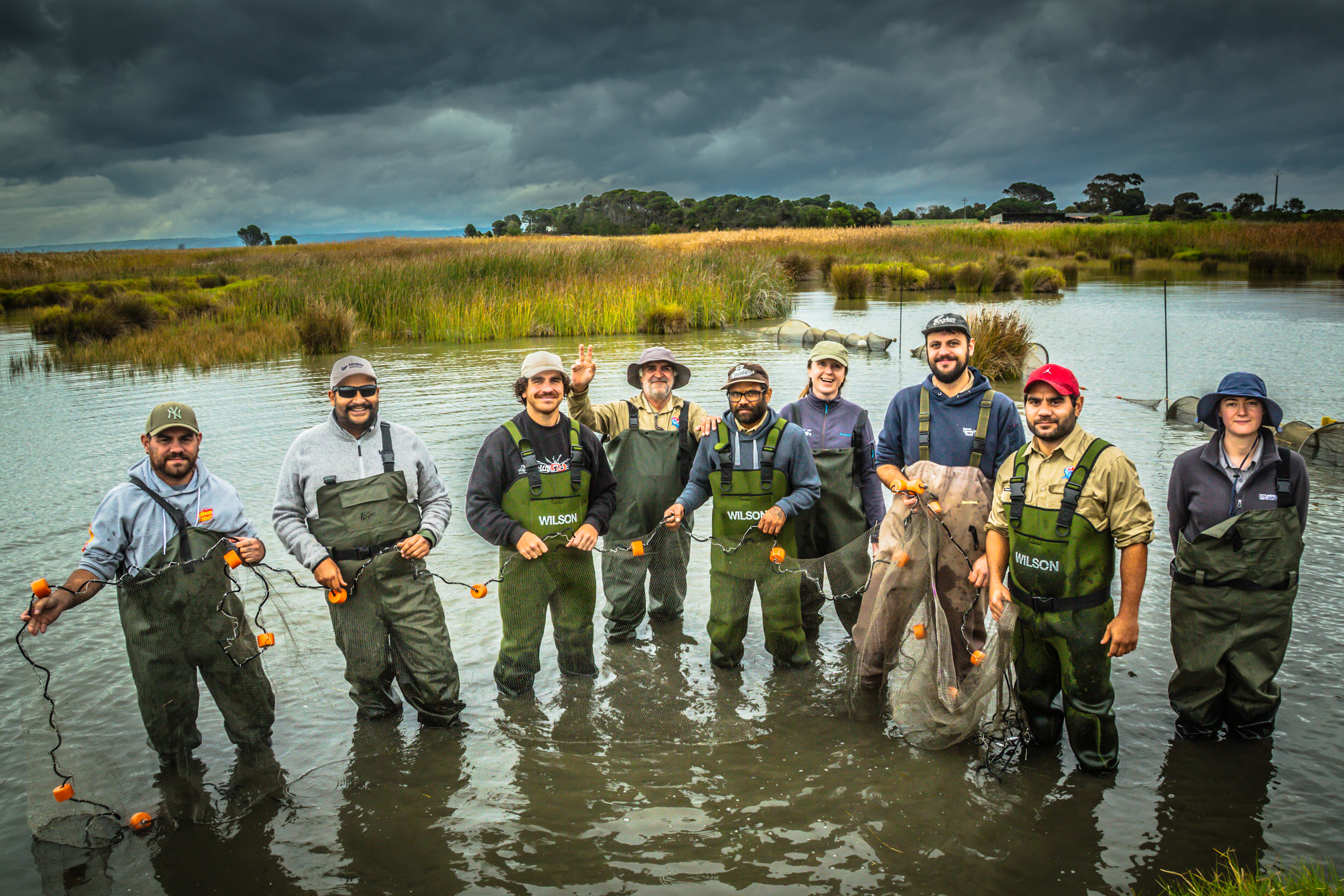
The day after the workshop, Ngarrindjeri Rangers joined Landscape Hills and Fleurieu and Nature Glenelg Trust staff on Country at Clayton Bay. At a wetland identified as a potential release site for Southern Bell Frog reintroductions, Ngarrindjeri Rangers used nets to remove invasive fish and assess conditions.
Tara Daniell, Freshwater Ecologist at Landscapes Hills and Fleurieu, also confirmed the presence of native fish, a promising sign for ecosystem recovery.
“We found several species of native fish including Common Galaxias, Unspecked Hardyhead, Flathead Gudgeon and Congoli. That’s a great indicator of the health and diversity of the wetland. It’s looking like it could be a suitable release site for Southern Bell Frogs, and we look forward to working with the Ngarrindjeri Ranger team as the project progresses,” she said.
This hands-on work reflects the NAIDOC theme in action, showing how, 50 years on, the movement continues not only in celebration, but through leadership, partnership and practical change.
“When cultural knowledge guides environmental action, outcomes are stronger, more meaningful and more enduring,” Mr Jackson said.
The Southern Bell Frog recovery project is part of Landscapes Hills and Fleurieu’s Back from the Brink project.
Back from the Brink is funded by the Australian Government Natural Heritage Trust and delivered by Hills and Fleurieu Landscape Board, a member of the Commonwealth Regional Delivery Partners panel.
Photo: The Ngarrindjeri Ranger team with Landscapes Hills and Fleurieu and Nature Glenelg Trust ecologists at Clayton Bay. Credit: Matt Turner.